I build AI systems that know what they are talking about.
CTO and co-founder at Lorefully. I came to software through a PhD in hydrogen and fuel cell systems and postdoctoral machine learning research at Stanford and DTU, then spent five years leading engineering and data teams in energy storage.
Based in Dolgellau, Wales.
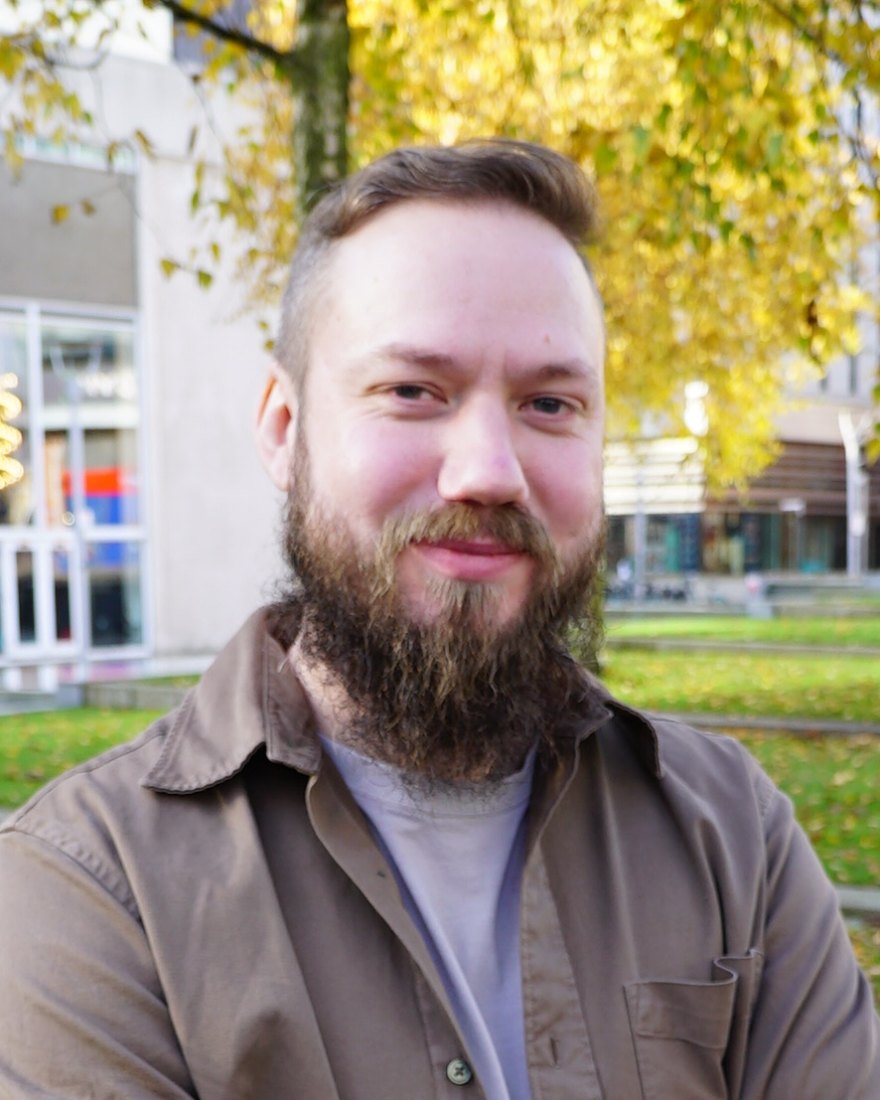
Now
Co-founder and CTO at Lorefully
Lorefully turns human expertise into actionable intelligence — capturing and structuring what people know before it disappears. My side of it is the engineering: question-answering systems built on expertly curated knowledge sets rather than general-purpose models, and a testing environment that compares LLMs, embedding models and vector databases against each other on the same questions.
The platform I built is running Project Keel, a UK-wide analysis of skills dependencies in shipbuilding for the National Shipbuilding Office, with Connected Places Catapult and Innovate UK funding. Surveys, interviews and roundtables all land in one place, which is what turns a months-long survey exercise into a report in weeks.
If you are talking to Lorefully and want to know who is behind the engineering, that is me.
What I do
AI and machine learning systems
Retrieval pipelines, embedding and model selection, and the evaluation harnesses that tell you which combination actually answers your questions correctly. Bayesian experimental design, Gaussian processes and genetic algorithms when the problem is optimisation rather than language.
Cloud architecture and backend engineering
Python services on Azure, AWS and GCP, IoT data ingestion from physical hardware, and the testing discipline that keeps a codebase changeable after the original team has moved on.
Technical leadership and data strategy
Building and leading small engineering teams, deciding what to build and what to buy, and setting a data strategy a hardware business can actually follow.
How I work
Four things you can expect
Small teams and short feedback loops. I would rather ship something narrow and watch it get used than plan something broad.
Plain language, in meetings and in writing. If a sentence needs a glossary it usually needs rewriting.
I say what is uncertain. Most bad technical decisions I have watched happen came from someone rounding a maybe up to a yes.
I still write code. Not all of it, but enough to know what I am asking of the people who do.
Track record
Roles
CTO & Co-founder, Lorefully
Co-founded the company and built the platform it runs on, including the evaluation environment used to choose its models, embeddings and stores. Currently delivering Project Keel for the National Shipbuilding Office.
Head of Software & Data, Aceleron
Led development of core energy storage products, architected the Python backend services and set the company’s data strategy, applying machine learning to battery optimisation. Built the IoT devices and cloud platform behind the data services in the BATLAB, first deployed in Uganda. The same devices went on to Kenya, Barbados and the UK.
Postdoctoral Researcher, Stanford University
Applied Gaussian process machine learning to genetic algorithms in materials science, and led development of the group's in-house ML framework.
Postdoctoral Researcher, Technical University of Denmark
Contributed a genetic algorithm to ASE, the open-source Atomic Simulation Environment, extending it to search for Pareto-optimal solutions.
Education
PhD, Hydrogen & Fuel Cell Systems — University of Birmingham
Computational modelling and optimisation of fuel cell systems, using genetic algorithms written in Fortran and Python and run on national supercomputing facilities.
MSc, Molecular Modelling — Cardiff University
Protein folding, quantum mechanics and crystalline structures, programmed in C.
BSc, Forensic Science — University of Glamorgan
Including the computer forensics module where the programming started.
Research to industry
Why I left research
Academia taught me how to be rigorous about things that are hard to measure, which turns out to be most of what matters in machine learning. What it could not give me was a user. I wanted the work to be used rather than cited, so I went to a company making physical batteries, where being wrong shows up in hardware rather than in a reviewer’s comments.
I kept the habits. I still want to see the evaluation before I believe the result.
Contact
Available for contract technical leadership, consulting and software strategy.
Email is the fastest way to reach me. I reply to anything specific.